 We have the prophetic word confirmed, which you do well to heed as a light that shines in a dark place, until the day dawns and the morning star rises in your hearts. (2 Peter 1:19)
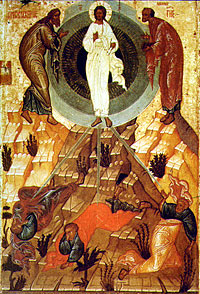
In the Epistle for the Transfiguration, St. Peter insists that the Gospel is not a religious tale polished by later generations. He had stood on Mount Tabor. He had seen the face of Christ shine like the sun and had heard the voice of the Father: “This is My beloved Son.”
Peter also knew how quickly a person can forget what he has seen. The disciple who witnessed the glory of Christ would later deny Him three times. The light of Tabor did not spare Peter from fear, confusion, or failure. It gave him something to return to after he had fallen.
The world can be dark, and so can the human heart. We may confess that Christ is Lord and still live as though fear, anger, illness, politics, or death were really in charge. We are often more impressed by the darkness immediately before us than by the glory of God we claim to believe in.
The Transfiguration does not ask us to pretend that darkness is unreal. Christ descends from Tabor and continues toward betrayal, the Cross, and the tomb. But the disciples have been shown who it is that will suffer. “Thy disciples beheld Thy glory as far as they could bear it,” we sing, “so that when they would behold Thee crucified, they would understand that Thy suffering was voluntary.”
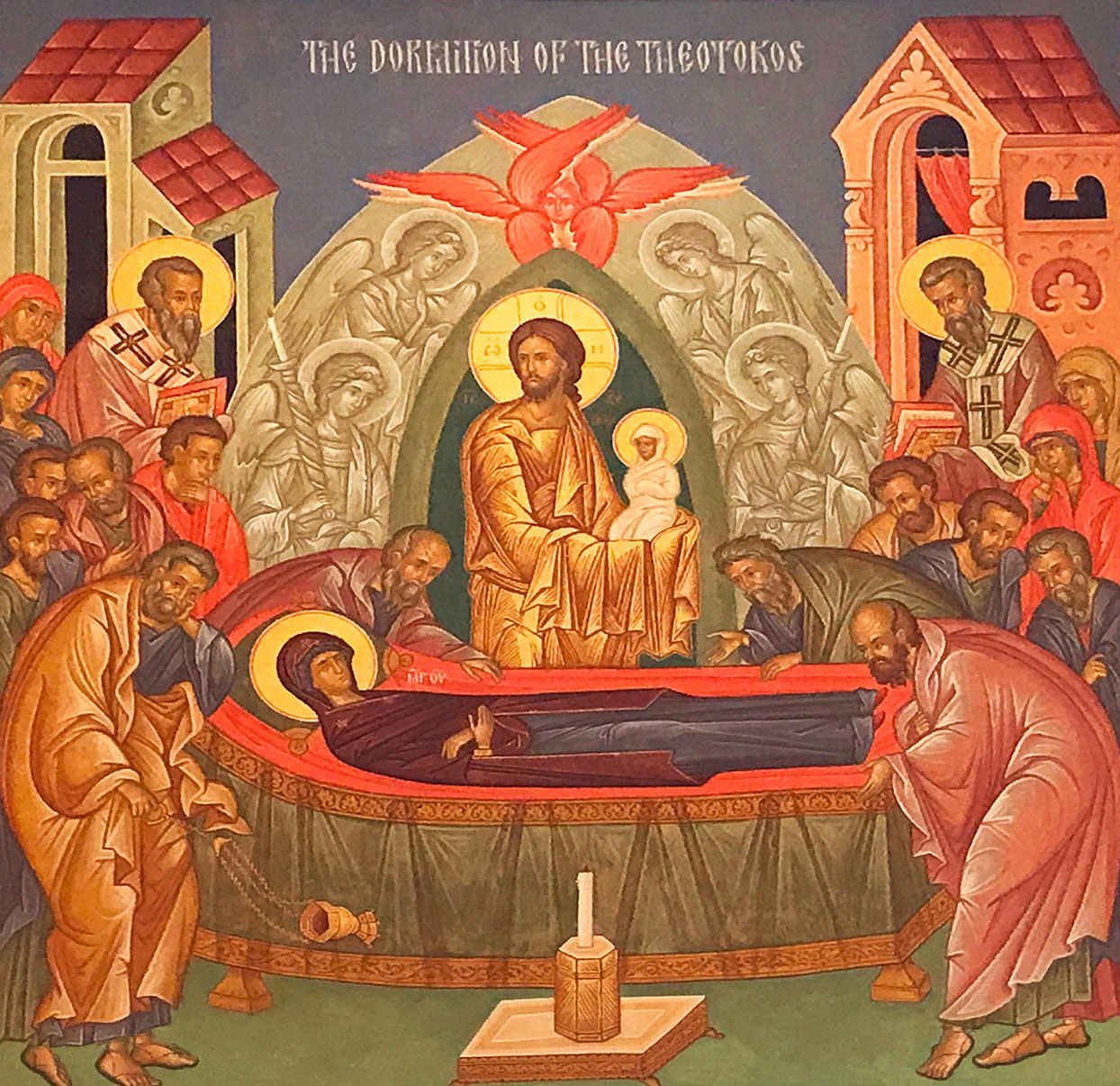 There is a beautiful movement from the Transfiguration on August 6 to the Dormition on August 15. The Transfiguration prepares the disciples for the death of Christ. The Dormition reveals what His death and Resurrection mean for those who belong to Him.
The apostles gather around the bed of the Theotokos in grief. The feast does not ask us to disguise death with pious language. Yet grief is not despair, be- cause death is no longer the unquestioned master of human life. “For being the Mother of Life,” we sing, “she was translated to life by the One who dwelt in her virginal womb.”
We spend much of our lives keeping death at a safe distance, until it enters the room and refuses to be ignored. The Dormition teaches us neither to romanticize it nor to fear it as though Christ had not risen.
Christian hope is not optimism. It is the refusal to allow suffering, fear, or death to tell us what is finally true. Until the morning star rises in our hearts, we walk by faith, carrying the light of Tabor into dark places and learning with the Mother of God to entrust our lives—and at last our death—to Christ, the Lord of glory and Giver of Life.
The August Fast
The first two weeks of August are set apart as a kind of protected time in the Church’s year. From August 1 through August 14, the Church invites us to step back from our usual habits and prepare for the feasts of the Transfiguration and the Dormition. The fast is brief, especially when compared with Great Lent, but it is traditionally kept quite strictly.
Fasting is sometimes reduced to a set of dietary rules. The rules have their place, but they serve a larger purpose. We fast in order to become less governed by appetite, impulse, and distraction.
We simplify our meals so that our life may become more focused. We give up something ordinary so that we may remember what is essential. Of course, it is possible to keep the fast quite carefully and remain just as impatient, self-absorbed, and unmerciful as before. Changing what is on the plate is easier than changing the heart. But the plate is meant to help with the heart.
Several beautiful customs mark this season:
The Beginning of the Fast (August 1) — The fast traditionally begins with the Procession of the Cross and the blessing of water. Water, one of the simplest elements of creation, becomes a bearer of grace and a sign that ordinary life can be sanctified by the presence of Christ.
Transfiguration (August 6) — Grapes and other fruits are blessed in thanksgiving for the harvest. The first fruits are offered back to God, acknowledging that the earth, its seasons, and all that sustains us are His gifts.
Dormition (August 15) — In many places, flowers and fragrant herbs are blessed. The custom recalls the tradition that a sweet fragrance filled the empty tomb of the Theotokos. Their beauty and fragrance express the joy of a feast that does not deny death but proclaims that death has been overcome in Christ.
These customs are not decorations added to the feasts. Water, fruit, flowers, and herbs bring the material world into our worship. But blessing creation means little if we continue to consume it thoughtlessly, waste its gifts, or refuse to give thanks.
The August Fast asks only a short time from us. Yet even two weeks can expose how attached we are to comfort, routine, and having things our own way. That discovery is not a failure. It may be the beginning of repentance—and of genuine transfiguration.

St. Nicholas Orthodox Church
102 Ross Avenue
San Anselmo, CA 94960
pastor: V. Rev. Stephan Meholick
phone: 415.454.0982
 St. Nicholas Orthodox Church is a parish of the Orthodox Church in America in San Anselmo, CA. The Orthodox Church in America is the autocephalous (self-governing) Orthodox Church on this continent, whose jurisdiction runs from Canada through Mexico under the omophor of His Beatitude, our Metropolitan TIKHON.